
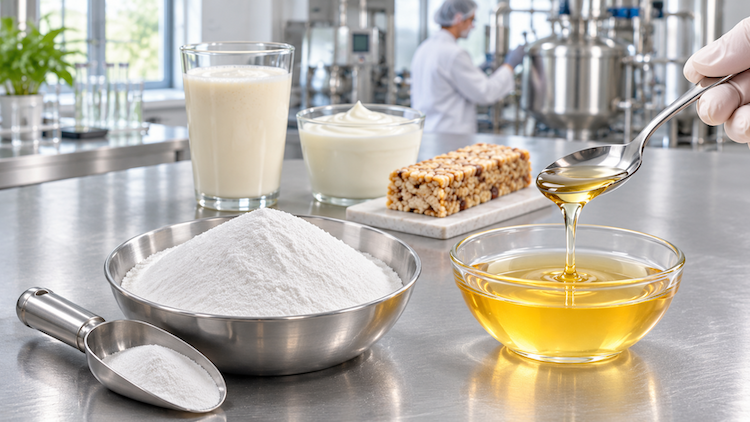
A protein drink that delivers plenty of protein but very little fiber. A convenient snack that takes the place of part of a meal and offers little nutritional variety. For research and development teams, these examples show why dietary fiber deserves attention as GLP-1 medications change how some consumers eat.
When people eat less, adding nutrients to a formulation can help improve the nutritional profile of each serving. Taste, digestive tolerance, and convenience all matter as the product takes shape.
For food manufacturers, this raises a practical question. How can products help meet the nutritional needs of people who eat smaller portions? It starts with looking at the full formulation and what each ingredient contributes.
Smaller portions make nutritional quality more important
Medications that act on the GLP-1 pathway can reduce appetite and change how much people eat. When food intake drops, meeting nutritional needs can become harder without adjustments to what people eat.
A joint advisory from scientific societies focused on nutrition and obesity emphasizes the importance of preventing nutrient shortfalls and monitoring dietary changes during GLP-1 treatment. It also calls for attention to overall diet quality and gastrointestinal symptoms.
For manufacturers, this creates an opportunity to develop products with a carefully planned nutritional profile in servings that are easy to consume and fit into different parts of the day.
A beverage, for example, can combine protein and fiber in the same serving. A snack can be reformulated to provide more fiber in the amount people typically eat.
Products like these give consumers more options as part of a varied diet.
Why dietary fiber and gut health deserve attention
Constipation can occur during GLP-1 treatment, making fiber intake, hydration, and digestive tolerance important considerations in nutrition care.
Scientific guidance suggests that gradually adding fiber-rich foods may help. The right approach depends on individual needs and symptoms, and dietary adjustments may be necessary when gastrointestinal discomfort occurs.
For R&D teams, this reinforces the importance of choosing the type of fiber and evaluating how much to include per serving. Different fibers behave differently in the body and during manufacturing.
The amount of fiber listed on the nutrition label is one part of the project. How the product tastes and feels, and how well the fiber works in the formulation, should also guide development.
Practical ways to add fiber to foods and beverages
Start by identifying where fiber can improve the nutritional profile while keeping the product easy and enjoyable to consume. Applications for dietary fiber include yogurt, pasta, supplements, cookies, and confectionery.
- Beverages with protein and fiber. Test how well the ingredients disperse, how easily the beverage flows, and how consumers respond to its taste and texture.
- Bars and small snacks. Check how much fiber each serving provides while maintaining a pleasant texture.
- Powdered mixes. Evaluate ease of preparation, uniformity, and how the mix behaves after reconstitution.
- Baked goods. Compare fiber-enriched recipes with the original formulation, paying attention to volume, softness, and flavor.
These examples offer starting points for testing. Results depend on the type and amount of fiber, the other ingredients, and the manufacturing conditions.
Consider the fiber alongside the rest of the formulation. In a smaller serving, the balance of protein, fiber, calories, and other nutrients should reflect the product’s nutritional goals
FiberSMART® as a soluble fiber option for formulation
FiberSMART®, supplied by Frootiva®, gives manufacturers another soluble fiber option. Made from tapioca or corn starch, it is available in powder and syrup forms.
Frootiva lists the following characteristics. Water solubility and low viscosity, both relevant to beverage formulation.
- Low sweetness, which makes it possible to add fiber without making the product overly sweet.
- Stability under demanding processing conditions, including high temperatures and low pH, depending on the application.
- High dietary fiber content, reported at more than 89% using the traditional AOAC method.
What to evaluate before moving into production
Start by defining the serving size and nutritional goal. From there, the team can test different fiber levels, adjust processing conditions, and monitor how the product holds up during storage.
For a protein drink, check whether adding fiber changes viscosity or mouthfeel. For a bar, evaluate firmness and chewiness. In both cases, test the complete formulation.
Frootiva recommends checking the FiberSMART® technical specification for applicable product categories and use limits. Teams should also verify the requirements for any proposed nutrient content claims.
As GLP-1 medications change eating habits, manufacturers have an opportunity to develop foods with thoughtfully sized portions and a clear nutritional contribution. Adding dietary fiber brings three priorities into the same development process: nutritional value, performance during manufacturing, and how the finished product tastes and feels.
Alongside FiberSMART®, Frootiva® Co offers high-quality natural ingredients for manufacturers, including fruit powders, dry extracts, and vegetable powders.
Frootiva®’s ISO 9001 certification reflects its commitment to ingredient safety, traceability, process control, and consistency, all of which help manufacturers meet increasingly stringent market requirements.
To learn more about the ingredients Frootiva® Co develops and supplies, call +55 11 4765-0732 or fill out the contact form.
0 Comments